




On one side, the fog-covered Lâm Đồng highlands at 1,500 meters, blanketed in mist year-round. On the other, the majestic Trường Sơn mountain range in Quảng Trị. Two regions hundreds of kilometers apart yet both producing an Arabica Cầu Đất and Arabica Khe Sanh that Vietnam’s coffee community is paying increasing attention to. No hype, no viral moment but anyone who has tasted them understands: these are two of the most valuable rough diamonds in Vietnamese coffee.
Over 130 years of history across two special regions
The Arabica story in both regions didn’t begin with a trendy coffee startup or a modern specialty movement it began with French colonists in the late 19th century.
Around 1890, French agriculturalists noticed that certain highland areas of Vietnam had climate and soil conditions similar to the famous coffee-growing regions of Africa and Central America. They brought over Arabica Typica one of the oldest original varieties in the world — and planted it experimentally in several locations, including Cầu Đất (Lâm Đồng) and Khe Sanh (Quảng Trị). Both exceeded every expectation.
More than 130 years later, both regions are still producing remarkable coffee each in its own distinct way.
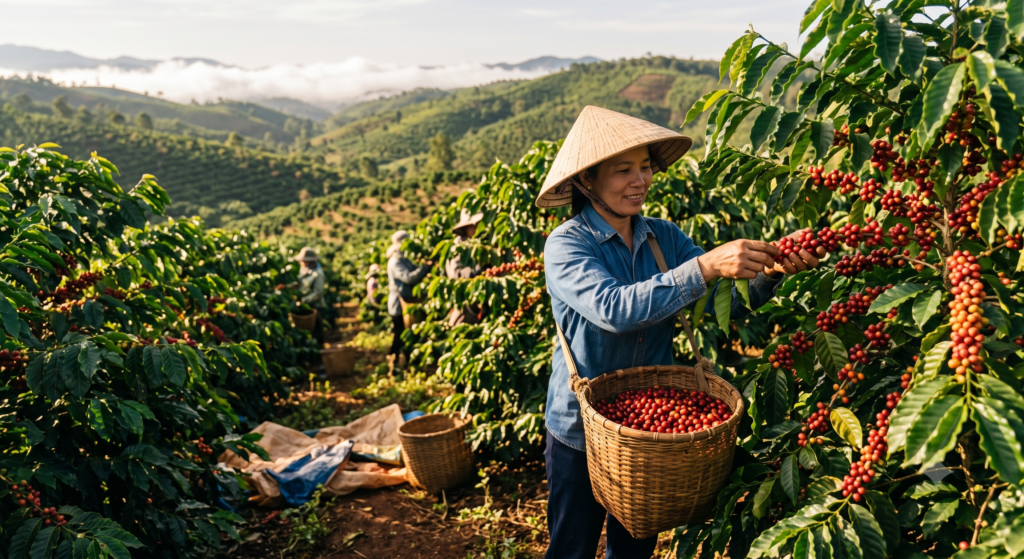
Cầu Đất (Đơn Dương, Lâm Đồng)
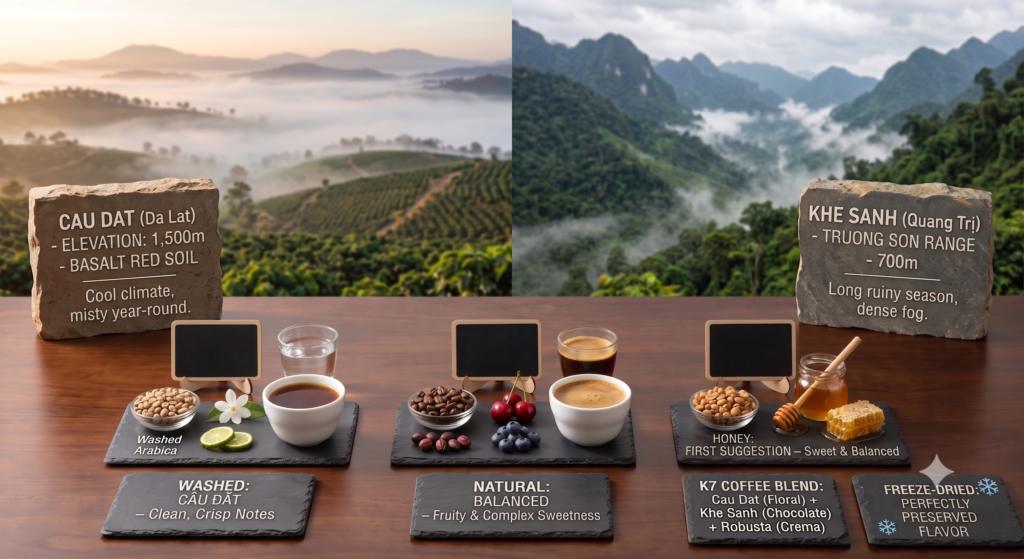
Sitting at 1,200–1,500 meters, with three conditions that can’t be replicated elsewhere:
- High altitude and cool temperatures — an average of just 15–18°C year-round makes the coffee cherries ripen extremely slowly, allowing them to accumulate more natural sugars and flavor compounds the foundation of every specialty coffee.
- Year-round fog — a thick blanket of mist acts as a natural shade, protecting the cherries from direct sunlight, extending the ripening period, and creating rare flavor complexity.
- Millions-of-years-old red basalt soil — rich in minerals from ancient volcanic activity, with excellent drainage, passing minerals into the beans that create their signature nutty, caramel notes.
Khe Sanh (Hướng Hóa, Quảng Trị)
A different story less well-known, but no less interesting. Sitting in the Trường Sơn range at 400–700 meters, Khe Sanh has the cool climate typical of central Vietnam: a long rainy season, thick morning fog, and a wide enough day-night temperature swing to let the cherries ripen slowly and evenly. The soil here isn’t volcanic basalt like Cầu Đất, but it’s rich in humus and natural minerals producing its own flavor profile: fuller body, lighter chocolate notes, and lower acidity than Cầu Đất.
The flavor of Cầu Đất arabica: a distinct “portrait”
If Ethiopian Arabica carries the soul of the tropical forest bursting with floral notes, fresh fruit, and airy lift then Cầu Đất Arabica is more like a quiet person with hidden depth. Not flashy, but the more you drink it, the more interesting it becomes.
Aroma (when brewing): Subtle white flowers, jasmine, mixed with lightly roasted almond and a very delicate hint of citrus. The moment water touches the coffee, the first waft that rises carries a sweet, warm aroma, like a morning on the highlands.
Taste: Natural sweetness is the first thing you notice not sugar-derived sweetness, but the sweetness that comes from the slow ripening of the cherry. Next comes a gentle, bright acidity, like biting into a sweet golden apple not sharp, not unpleasant. The body sits at medium not as light as Ethiopian Arabica, but not as heavy as Đắk Lắk Robusta either.
Finish: Lasts 30–60 seconds after drinking, leaving a light nutty impression, close to roasted almond and importantly, no bitterness. This is the mark of high-quality Arabica processed the right way.
Q-grader score: Cầu Đất Arabica typically scores 83–86 points on the SCA (Specialty Coffee Association) 100-point scale clearing the 80-point threshold that defines “specialty coffee.” That number didn’t come easily it’s the result of centuries of accumulated terroir.
Natural, washed, or honey? Three different versions of the same bean
One of the most interesting things about Cầu Đất Arabica is that, from the very same land, the post-harvest processing method alone can produce three almost entirely different flavor experiences.
- Washed: The outer skin is removed and the beans ferment in water tanks before drying. Result: the cleanest, clearest flavor, the most distinct floral notes, and a bright, crisp acidity. This is the best way to taste the pure “signature” of Cầu Đất’s terroir with no influence from the fruit’s flesh.
- Natural (dry process): The cherries are dried whole, with the skin on, letting the fruit flesh ferment directly around the bean. Result: noticeably sweeter, more fruity, a thicker body, and much more complex flavor. If washed is a delicate ink-wash painting, natural is a bold, colorful oil painting.
- Honey process: A middle ground part of the skin is removed while some of the fermented mucilage is left on. It balances the cleanliness of washed with the complex sweetness of natural. This is the ideal choice for anyone just starting to explore specialty coffee approachable, yet complex enough to stay interesting.
If you’re not sure where to start, Cầu Đất honey process is the most rewarding first step.
How to properly brew Cầu Đất arabica
There’s a golden rule in the world of specialty coffee: great flavor comes from great beans, but ruined flavor usually comes from brewing it wrong.
Cầu Đất Arabica is especially sensitive to temperature. Why? Because the compounds behind its floral aroma and sweetness are highly volatile and easily altered by excessive heat.
Water temperature
85–88°C is ideal. Never use boiling water at 100°C at that temperature, quinic acid in the coffee spikes sharply, turning the gentle acidity into an unwanted harsh bitterness. A simple tip: boil the water, turn off the heat, and wait exactly 2 minutes before brewing.
Brew ratio
1g of coffee to 15ml of water is a good starting point. For a stronger cup, reduce to 1:13. For a lighter one, increase to 1:17. But don’t stray too far in either direction too strong throws off the flavor balance, too weak strips away the body entirely.
Sugar and milk
The first time you try Cầu Đất Arabica, drink it black. Not because you have to “endure” it but because sugar completely masks the natural sweetness and delicate floral notes that took the bean an entire year to develop. Once you’ve tasted the real flavor, you’ll understand why coffee connoisseurs don’t need sugar.
Brewing vessel
Use a white porcelain cup with a wide mouth and no odor. This isn’t about ritual a colored cup affects your visual perception of the coffee’s color, which in turn subtly affects how you perceive the flavor. This is something cupping experts have verified over decades.
Cầu Đất & Khe Sanh arabica in freeze-dried coffee, why is this a perfect match?
Here’s a question most people never think to ask: why are Cầu Đất and Khe Sanh Arabica coffees typically associated with brewing equipment especially well-suited to freeze-drying technology?
The answer lies in their most fragile trait: their floral aroma and natural sweetness.
The compounds responsible for the signature floral aroma and flavor of Cầu Đất and Khe Sanh Arabica, linalool, geraniol, aromatic aldehydes are extremely volatile molecules. In traditional spray-drying, which uses temperatures of 150–200°C, they vanish entirely before the coffee powder even cools down. What’s left is caffeine, a bit of bitterness, and the word “Arabica” printed on the box.
Freeze-drying works on the exact opposite principle: brewed coffee is frozen down to minus 40°C, then placed in a vacuum chamber where the water sublimates directly into vapor without passing through a liquid phase with absolutely no heat involved. The result: the entire flavor essence is “frozen in place” and preserved within every particle of powder.
When you dissolve a packet of K7 CAPHE freeze-dried coffee in hot water, what’s actually happening is that you’re “releasing” those flavor compounds like opening a fragrant capsule. The flavor “switches on” within the first few seconds, remarkably clear and bright for an instant product.
That’s why K7 CAPHE built its foundation on freeze-drying technology and chose Vietnamese Arabica from two exceptional source regions, Cầu Đất (Lâm Đồng) and Khe Sanh (Quảng Trị), as the soul of the product. Cầu Đất Arabica brings delicate floral aroma and caramel sweetness, while Khe Sanh Arabica adds extra body and warm chocolate depth. Both are blended with Đắk Lắk Robusta to create a complete balance between refined aroma and bold body, with a full crema a cup of coffee that’s both sophisticated and satisfying, with no machine and no barista skills required.
Frequently asked questions
What’s the ideal brewing temperature for Cầu Đất arabica? The ideal temperature is 85–88°C. Avoid boiling water at 100°C, as it increases harsh bitterness and breaks down the delicate floral compounds in the beans.
Should I choose washed or natural as a beginner? If you want to taste Cầu Đất’s pure terroir, go with washed. If you prefer a sweeter, more fruity flavor, go with natural. For beginners, honey process is the most balanced and approachable choice.
What is the Q score of Cầu Đất arabica? It typically scores 83–86 points on the SCA’s 100-point scale, clearing the 80-point threshold required for specialty coffee recognition.
How is Khe Sanh arabica different from Cầu Đất arabica? Khe Sanh has a fuller body, lighter chocolate notes, and lower acidity, while Cầu Đất stands out for its floral aroma, delicate caramel sweetness, and brighter acidity.
Why are Cầu Đất and Khe Sanh arabica well-suited to freeze-dried coffee? Because freeze-drying uses no heat, the volatile floral and sweet compounds unique to these two regions are preserved almost intact something traditional spray-drying can’t achieve.
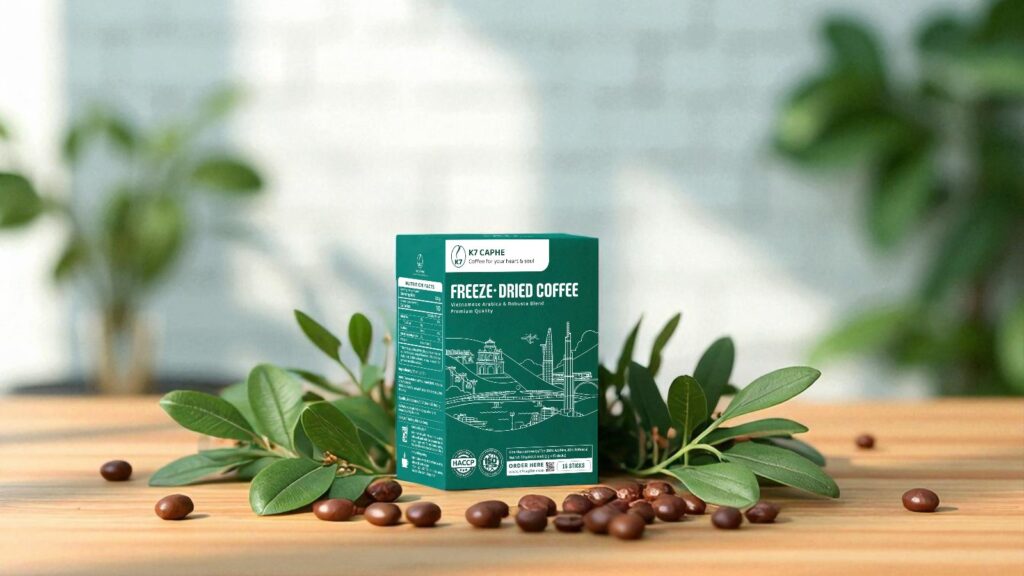
Enjoy Cầu Đất & Khe Sanh arabica in every K7 CAPHE stick
You don’t need to drive up to Đà Lạt or travel all the way to Khe Sanh to experience the flavor of these two exceptional highland regions. K7 CAPHE freeze-dried coffee packs the essence of Arabica from both Cầu Đất and Khe Sanh into one compact stick — brew it in 30 seconds with 85°C water, and drink it anywhere, right away.
Domestic customers: Order now via our website or e-commerce platform: Buy now — K7 CAPHE on Shopee
International customers: Please reach out to us directly: Contact K7 CAPHE
