




People across the Middle East have been adding cinnamon to coffee for centuries not because it smells better, but because in traditional Arab medicine, the combination was believed to make the body healthier through the morning. Modern science has since weighed in, and the result is: they weren’t wrong. Combined with additive-free cold-dried coffee, the effect of that ancient recipe gets amplified in a way the ancients never imagined.
Cinnamon and health: what the science actually says
Cinnamon isn’t just an aromatic spice for pastries and winter tea. In the medical literature, it’s one of the most-studied natural foods for its metabolic effects and the evidence keeps getting more convincing.
The key compound: cinnamaldehyde
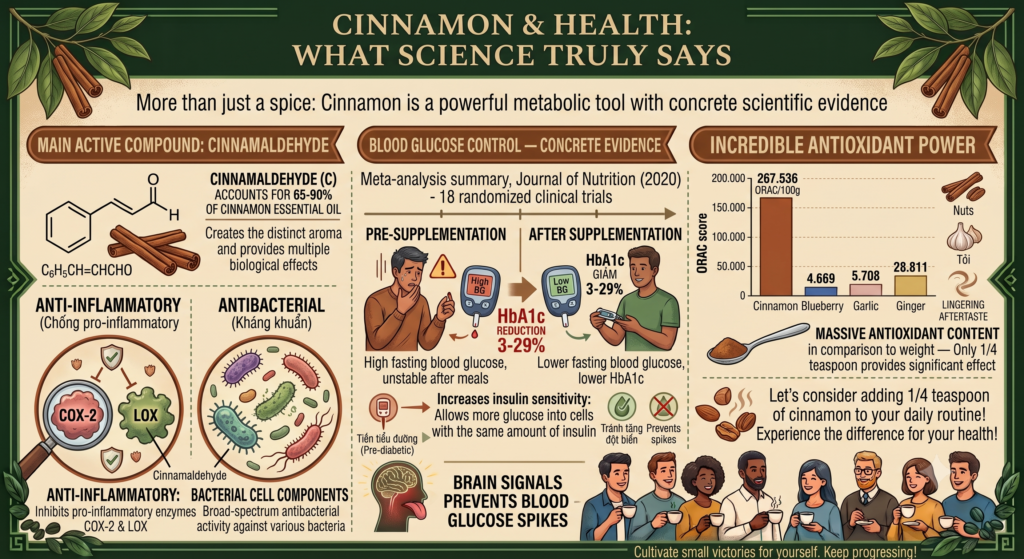
Cinnamon’s signature scent comes from cinnamaldehyde an aromatic aldehyde that makes up roughly 65–90% of cinnamon essential oil, depending on the variety. But cinnamaldehyde does more than smell good it also has anti-inflammatory effects by inhibiting pro-inflammatory enzymes like COX-2 and LOX, and broad-spectrum antibacterial activity against both gram-positive and gram-negative bacteria.
Blood sugar control, the actual evidence
A meta-analysis published in the Journal of Nutrition (2020), pooling data from 18 randomized controlled clinical trials, found that cinnamon supplementation lowers fasting blood glucose by 3–29% and reduces HbA1c (the 3-month average blood-sugar marker) in people with type 2 diabetes. The main mechanism: cinnamon increases insulin sensitivity meaning the same amount of insulin moves more glucose into cells, leading to more stable blood sugar after meals.
This is particularly relevant for people who are prediabetic, sit at a borderline blood-sugar reading, or simply want to avoid a blood-sugar spike after breakfast.
Remarkable antioxidant power
On the ORAC scale (Oxygen Radical Absorbance Capacity) a measure of how well something neutralizes free radicals cinnamon dramatically outperforms several foods commonly labeled “superfoods”:
| Food | ORAC units/100g |
|---|---|
| Cinnamon | 267,536 |
| Ginger | 28,811 |
| Garlic | 5,708 |
| Blueberry | 4,669 |
That means a small amount of cinnamon delivers a huge amount of antioxidant capacity relative to its weight which is why just 1/4 teaspoon a day is enough to make a meaningful difference.
Ceylon vs. Cassia cinnamon: the crucial difference most people don’t know
This is the point 90% of cinnamon articles skip over but it matters enormously if you want to use cinnamon daily and safely. What’s sold as “cinnamon” on the market is actually two botanically distinct plants:
| Criteria | Ceylon cinnamon (Cinnamomum verum — “True Cinnamon”) | Cassia cinnamon (Cinnamomum cassia) |
|---|---|---|
| Origin | Sri Lanka, also grown in Madagascar and the Seychelles | The most common type in Vietnam and most Asian markets |
| Flavor | Mild, sweet, delicate — not overpowering | Strong, bold, sharp — the kind used in phở and baked goods |
| Coumarin content | Very low, under 0.004% — safe for daily use | High, 0.4–0.8% — can be harmful to the liver with heavy, prolonged use |
| How to identify it | Rolled into thin, paper-like layers, light brown, easily crumbled | Thick, hard, difficult to break, deeper reddish-brown |
| Price | Usually more expensive (lower yield, higher quality) | Cheaper, more widely available |
| Suitable for daily use? | Yes | Not recommended, the EU has restricted high-dose Cassia in processed foods for safety reasons |
Bottom line: If you want to add cinnamon to your coffee every day as a long-term health habit, choose Ceylon. Cassia is fine for occasional cooking, but it isn’t suitable for a daily supplemental dose. Ceylon cinnamon can be found at organic grocers, premium supermarkets, or ordered online by searching “Ceylon cinnamon” or “true cinnamon.”
Why is cold-dried coffee + cinnamon better than regular coffee + cinnamon?
You can add cinnamon to any coffee but there are specific reasons additive-free cold-dried coffee is the best base for this recipe:
- No sugar base to bury the cinnamon under — when you add cinnamon to sweetened milk coffee, its flavor and aroma get dissolved into the heavy sweetness and become hard to pick out on their own. With additive-free, sugar-free K7 CAPHE, cinnamon comes through clearly, and its metabolic effect isn’t undermined by a blood-sugar spike from added sugar.
- A synergy effect between polyphenols — chlorogenic acid in cold-dried Arabica (better preserved than in spray-dried coffee) and cinnamaldehyde in cinnamon both inhibit the alpha-glucosidase enzyme, which breaks carbohydrates down into simple sugars in the gut. When the two work together, the effect of slowing post-meal sugar absorption is amplified, not just added together.
- No competing additives — some instant coffees contain maltodextrin, synthetic creamer, or thickening agents that can interfere with how cinnamaldehyde is absorbed in the digestive tract. K7 CAPHE is pure cold-dried coffee with nothing added so cinnamon works exactly as it’s meant to, without interference.
- Genuinely convenient — mix 1 stick of K7 CAPHE + 1/4 teaspoon of Ceylon cinnamon into 150ml of 83°C water, stir for 10 seconds, and you’re done in under a minute. This is a health habit you can actually keep up every day, not just on weekends when you have extra time.
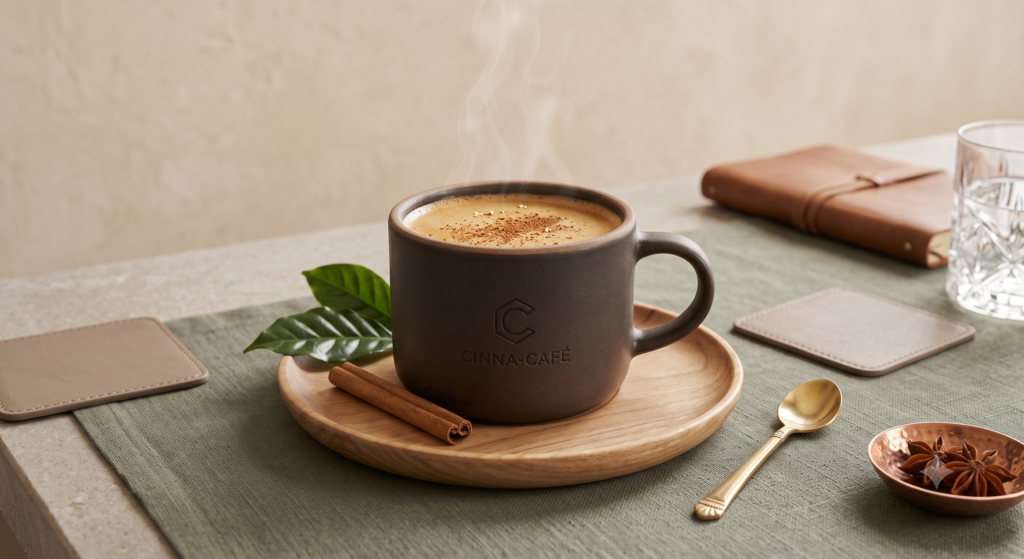
The “Morning Metabolic Coffee” recipe, try it tomorrow morning
This is the simplest version of the recipe, designed to be drunk during the morning “caffeine window” (9:30–10:00 AM) before you start the important tasks of your day.
Ingredients
| Ingredient | Amount |
|---|---|
| K7 CAPHE cold-dried coffee | 1 stick |
| Water at 83°C, boiled and rested 2–3 minutes | 150ml |
| Ground Ceylon cinnamon | 1/4 teaspoon |
| Extra-virgin coconut oil (optional, for a keto version) | 1 teaspoon |
| Raw honey, not heated (optional, for natural sweetness) | 1/2 teaspoon |
Method
- Pour 83°C water into a cup.
- Dissolve the K7 CAPHE stick, stirring well.
- Add the Ceylon cinnamon and stir for another 10 seconds.
- If using coconut oil: add it and stir vigorously, or use a milk frother for a smoother texture.
- Drink right away while still warm, don’t let the cinnamon settle for too long.
Note: Don’t add honey while the water is still very hot (above 60°C), since high heat destroys the beneficial enzymes in raw honey. If you want to add honey, wait until the cup has cooled to around 50–55°C.
Best time to drink it: 9:30–10:00 AM, this lines up with the optimal caffeine window and is usually 60–90 minutes after breakfast, right as blood sugar from breakfast starts to dip. Drinking it then lets the cinnamon help stabilize blood sugar through the mid-morning while the caffeine keeps you focused until lunch.
Important notes before you start
| Note | Detail |
|---|---|
| Not a substitute for medication | Cinnamon supports blood-sugar control, but it is not a diabetes treatment. If you’re taking metformin or insulin, talk to your doctor before adding cinnamon regularly, since your medication dose may need adjusting as your blood sugar improves. |
| Pregnant women should be cautious | High doses of cinnamon can stimulate the uterus. Using cinnamon as a regular cooking spice is entirely safe, but taking it as a daily supplement should be discussed with a doctor first. |
| Start with a small amount | If this is your first time adding cinnamon to your diet, start with 1/8 teaspoon in the first week to let your digestive system adjust, then increase to 1/4 teaspoon from the second week. |
| Buy the right type and form | Ceylon cinnamon sticks are always better than pre-ground powder, since the cinnamaldehyde essential oil is better preserved unground. If you buy it ground, choose freshly ground cinnamon and store it in a sealed jar away from light cinnamaldehyde oxidizes quickly when exposed to air and heat. |

Frequently asked questions about coffee + Ceylon cinnamon
Does cinnamon actually help stabilize blood sugar? A meta-analysis in the Journal of Nutrition (2020), pooling 18 randomized controlled clinical trials, found that cinnamon supplementation lowers fasting blood glucose by 3–29% and reduces HbA1c in people with type 2 diabetes, mainly through increased insulin sensitivity.
Should I use Ceylon or Cassia cinnamon? Ceylon is the safer choice for daily use, since its coumarin content is extremely low (under 0.004%) compared to 0.4–0.8% in Cassia. Cassia is fine for occasional cooking but shouldn’t be used regularly at a supplemental dose.
How much cinnamon should I use per day? About 1/4 teaspoon of ground Ceylon cinnamon a day is enough to make a meaningful difference. Beginners should start with 1/8 teaspoon in the first week and increase gradually from there.
What’s the best time of day to drink coffee + cinnamon? Around 9:30–10:00 AM — this lines up with the optimal caffeine window and is usually 60–90 minutes after breakfast, when blood sugar starts to dip.
Should people on diabetes medication add cinnamon? Talk to a doctor first. Cinnamon supports blood-sugar control but doesn’t replace medication, and your metformin or insulin dose may need adjusting as your blood sugar improves.
Can pregnant women drink coffee + cinnamon? Using cinnamon as an ordinary cooking spice is safe, but taking it as a daily supplement (as in this recipe) should be discussed with a doctor first, since high doses of cinnamon can stimulate the uterus.
A small habit, every morning, for 21 days — that’s all it takes to feel the difference. Additive-free K7 CAPHE cold-dried coffee is the perfect base to start your own Morning Metabolic Coffee routine. K7 CAPHE cold-dried coffee, Vietnamese Arabica (Cầu Đất & Khe Sanh) blended with Đắk Lắk Robusta, no additives, no flavorings. Add Ceylon cinnamon and start your wellness journey from your morning cup.
Domestic customers: Buy now on our website or on e-commerce platforms: Buy now — Shopee K7 CAPHE
International customers: Please contact us for assistance: Contact K7 CAPHE
