




When standing before a coffee shelf in a supermarket or at a roastery, you will face a reality where packages labeled ‘100% Arabica’ often carry a higher price tag or sit in a distinct segment compared to traditional coffee packs, which are usually Robusta or blends.
At this moment, the question for the buyer is no longer just about what to drink to stay awake. It becomes a question of what this price difference actually brings. What specific differences are we paying extra for? Is it the distinct, refined acidity instead of the familiar bold bitterness? Is it the rich aroma, or is it simply the cost of the demanding cultivation process required by this coffee variety?
To truly understand the value of the bag of coffee you are about to buy, we need to look deep into the nature of Arabica beans, ranging from their genetics and growing conditions to the chemical reactions that create their flavor.
1. Origin and history of development of Arabica coffee beans
The Arabica coffee tree originates from the southwestern highlands of Ethiopia. This is considered the cradle of coffee, where the first wild Arabica beans were discovered. According to legend, a goat herder named Kaldi noticed his goats becoming unusually energetic after eating red berries from a strange tree, leading to the discovery of the coffee bean’s effects.
From Ethiopia, Arabica beans followed Arab traders to Yemen in the 15th century, where they were cultivated systematically for the first time. The port city of Mocha became the center of the world’s coffee trade for centuries. By the 17th century, Arabica beans began to spread across Europe and subsequently expanded to colonies in the Americas and Asia, forming the famous “Coffee Belt” known today.
Origin and history of development of Arabica coffee beans
2. Characteristics of Arabica coffee beans
Growing conditions
Arabica trees grow best in regions with altitudes ranging from 900 to 2000 meters above sea level. Arabica loves a cool subtropical climate, with ideal temperatures fluctuating between 15-24°C, and requires regular rainfall. These specific soil conditions and high altitudes force the coffee bean to develop more slowly. This helps them accumulate substantial sugar and complex flavor compounds, creating richness in the bean when roasted.
Bean shape
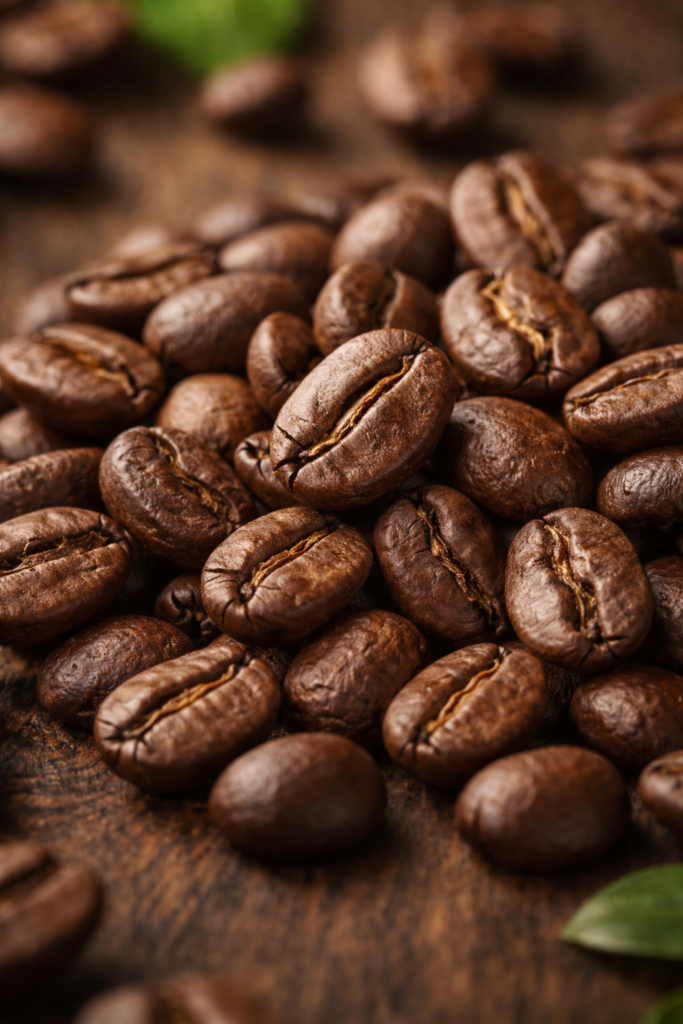
Arabica beans typically have an oval shape, looking more elongated and flatter compared to Robusta beans. The clearest identifying feature is the groove in the center of the bean. The groove of an Arabica bean has a soft, wavy line that often curves like an ‘S’ shape, rather than a straight line like Robusta.
Chemical composition
Differences in flavor are determined by chemical composition. Compared to Robusta, Arabica beans have a lipid (fat) content that is nearly 60% higher and a sugar (sucrose) concentration that is nearly double. When roasted, the sugar caramelizes, and the lipids act as a solvent to help retain the complex aromatic compounds that are created. Conversely, Arabica has a caffeine content only half that of Robusta. This makes its bitterness less harsh and allows other delicate flavor notes to shine.
Signature flavor
The most prominent and valuable characteristic of Arabica is its refined and pleasant acidity, resembling the taste of ripe fruit or wine rather than a harsh sourness. Its aroma is incredibly diverse and complex, potentially including floral notes, various fruits like oranges, lemons, and berries, to sweet notes like chocolate, caramel, and nuts. The aftertaste of Arabica coffee often leaves a sweet, smooth, and clean sensation on the palate.
| Criteria | Arabica beans | Robusta beans |
| Scientific name | Coffea arabica (commonly called “Cà phê Chè” in Vietnam) | Coffea canephora (commonly called “Cà phê Vối” in Vietnam) |
| Caffeine content | Low (0.8% – 1.4%)
Trees grown in high regions have fewer pests, so they do not need to produce much caffeine for self-defense. This creates a less bitter, more refined, and gentler taste. |
High (1.7% – 4.0%)
Caffeine content is 2-3 times higher than Arabica, acting as a natural “pesticide” to help the tree withstand pests in low regions. The characteristic harsh bitterness provides a strong wake-up sensation. |
| Flavor | Complex, refined acidity, fruit notes, sweet aftertaste
Due to high Sugar (~8%) and Lipid (~15%) content, roasting creates hundreds of diverse aromatic compounds. A sophisticated tasting experience with multiple layers of flavor, similar to wine. |
Bold, harsh bitterness, earthy, woody, rubbery smells
Due to lower Sugar (~4%) and Lipid (~10%) content, it does not create many complex aromatic compounds. A strong, simple experience with a bold traditional coffee taste. |
| Bean shape | Beans have an oval, elongated shape. The center groove has a soft wavy line, often shaped like an ‘S’. | Beans are round and tend to be smaller than Arabica beans. The center groove is a deep, straight line. |
| Growing conditions | Trees require an altitude above 900m and a cool climate (15-24°C). The tree is very sensitive, prone to pests and diseases (especially leaf rust), and has a low yield per tree. | Trees grow well in low regions under 900m and can withstand hot, humid climates. This variety has superior resistance to disease and pests, offering a very high yield per tree. |
| Price | High cultivation costs, high risk, and low yield make the commodity market price often nearly double that of Robusta. Primarily used for specialty coffee and single-origin coffee. | Trees are easy to grow, have high yields, and carry much lower risk, helping to reduce production costs. Primary applications are for instant coffee and blends to lower prices, increase caffeine, and create a thick crema layer for Espresso. |
Detailed comparison table: Arabica vs Robusta
The difference in caffeine content is significant. Since caffeine naturally has a bitter taste, the higher caffeine content in Robusta contributes to its characteristic bitterness. Conversely, the low caffeine content combined with high sugar and lipids helps Arabica beans possess a more balanced and refined flavor profile. This fundamental difference is the key when discussing the topic of Arabica vs Robusta.
3. Criteria for selecting the best Arabica coffee beans
To find the best Arabica coffee beans, understanding the factors that affect quality is essential. This is not just about choosing a product. It is a process of discovering flavor.
- Origin
“Terroir” is a term originating from the wine industry, referring to the collective impact of the environment on the flavor of agricultural products, including soil, altitude, climate, and farming methods. Each region will give Arabica beans a distinct flavor “fingerprint”.
Ethiopia
Known as the “cradle of coffee”, Arabica from Ethiopia is famous for its complexity and diversity. Renowned regions like Yirgacheffe or Sidamo often produce coffee with aromas resembling a bouquet (jasmine, orange blossom) and the bright, elegant acidity of berries and bergamot. Its structure is often gentle and elegant, almost like tea.
Colombia
Colombian coffee is the model of balance. Grown on the slopes of the Andes, coffee beans here often have the sweet taste of caramel, milk chocolate, and a nutty aftertaste. Moderate acidity and a round body make Colombian coffee an excellent choice for those looking for an easy-to-drink, harmonious cup.
Cau Dat, Da Lat (Vietnam)
With the advantage of an altitude over 1500m and a cool climate year-round, Cau Dat is the most famous high-quality Arabica growing region in Vietnam. Coffee here is characterized by a mild citrus acidity, interspersed with the sweetness of honey and the pure aroma of flowers and grass. The quality of Vietnamese Arabica is increasingly being recognized on the world coffee map.
- Processing method
Processing is the process of separating the coffee bean from the fruit flesh. This is a decisive stage that can completely change the flavor profile of the beans, even if they share the same origin.
Washed Process (Wet)
The skin and fruit flesh are removed with water before the beans are dried. This process helps “wash away” external factors, making the final flavor pure, “clean”, and most faithfully reflecting the characteristics of the growing region (terroir). The result is a cup of coffee with clear, bright acidity and transparent flavor.
Natural Process (Dry)
This is the oldest processing method, where the coffee cherry is dried whole under the sun. During this process, the coffee bean inside will slowly absorb sugar and flavor compounds from the drying fruit flesh. The result creates a cup of coffee with a heavy body, rich sweetness like ripe fruits (strawberry, blueberry), and lower acidity.
Honey Process
This method is a delicate combination of the two methods above. The fruit skin is removed, but part or all of the mucilage layer sticking around the bean is kept during the drying process. The amount of this mucilage will determine the “level” of honey (yellow, red, black honey), creating a perfect balance between the refined acidity of the wet method and the bold sweetness and thick body of the dry method.
- Roast level
Roasting is the process of using heat to transform the chemical compounds inside the green coffee bean, “unlocking” and developing more than 800 flavor compounds. The roaster’s skill largely determines whether the potential flavor of the bean is fully expressed.
Light Roast
Beans are cinnamon brown with a dry surface. At this roast level, the original flavor characteristics of the coffee bean (origin, processing) are preserved to the maximum. You will feel distinct acidity and vivid floral and fruit aromas. This roast level is ideal for manual brewing methods like Pour Over (V60) to fully enjoy the sophistication of the best Arabica coffee beans.
Medium Roast
Beans are a darker brown, and the surface is still dry or just starting to show a little oil. This is the most popular roast level, creating a perfect balance. The acidity is softened, the body (the feeling of fullness in the mouth) increases, and roast notes like caramel, chocolate, and roasted nuts begin to appear, blending with the original flavor.
Dark Roast:
Beans are dark brown to nearly black with an oily surface. At this roast level, the roast flavor will almost completely overpower the original flavor. Bitterness stands out, the body is very thick, and acidity is almost non-existent. Characteristic notes are dark chocolate, smoke, and sometimes a charcoal taste. This roast level is often used for Phin or traditional style Espresso.
Degree of roasting of coffee beans
- Freshness
This is an extremely important factor, but it is often overlooked. Coffee is an agricultural product and will lose flavor over time after roasting.
- Check “Roast Date”: Always look for the “Date of Roast” on the packaging instead of the “Best Before” date. Coffee reaches peak flavor between 4 days and 4 weeks after roasting.
- Buy whole beans: Pre-ground coffee will lose its aroma much faster due to the large surface area in contact with the air. Invest in a small grinder and only grind coffee right before brewing to ensure freshness and the best flavor.
4. Top 4 most popular Arabica bean varieties in Vietnam
Typica variety
Typica is considered the “original” coffee variety and one of the oldest and purest Arabica varieties in the world. This variety was introduced to Vietnam by the French very early on and is often called by the familiar name “Cà phê Mí”. Typica beans have an elongated oval shape. The standout feature of this variety is superior flavor quality. A standard cup of Typica coffee will have a bright, smooth acidity, deep sweetness, and an extremely rich aftertaste, often carrying floral and citrus notes. However, Typica has a major drawback: very low yield and extreme sensitivity to pests, especially leaf rust. Therefore, this variety is currently no longer popular in mass production but is still preserved and developed in specialty coffee farms.
Bourbon variety
Bourbon is a natural mutation from Typica, discovered on Bourbon Island (now Réunion). . Compared to Typica, Bourbon yields slightly higher output but still requires high farming techniques. The point that makes Bourbon valuable is its balance and excellent sweetness. It possesses pleasant acidity, a full body, and a complex aroma, often suggesting caramel, chocolate, and berries. This is one of the delicious varieties sought after by coffee connoisseurs globally when looking for the best Arabica coffee beans.
Mocha variety (Moka Cau Dat)
When mentioning Moka in Vietnam, coffee lovers will immediately think of Cau Dat, Da Lat. It is necessary to distinguish clearly that this is the name of a dwarf coffee variety mutated from Bourbon, not the drink mixing coffee and chocolate. The Moka variety is dubbed the “Queen” of Arabica varieties in Vietnam thanks to its extremely seductive and unique aroma. Moka beans are small in size but possess a passionate aroma of flowers and honey, often with a refined wine-like acidity and a lingering sweet aftertaste. Like Typica, Moka is very difficult to grow, has low yield, and requires special soil conditions that only Cau Dat can fully meet.
Catimor variety
Catimor is the most popular Arabica bean variety in Vietnam today, especially in new growing regions. This is not a purebred variety but a hybrid. The origin of Catimor is a combination of Caturra (a mutation of Bourbon) and Timor Hybrid. It is important to know that Timor Hybrid itself is a natural hybrid between Arabica and Robusta.
The very act of crossing Arabica and robusta in the genome has given Catimor superior characteristics: excellent resistance to leaf rust, very high yield, and the ability to adapt to many different climatic conditions, even at lower altitudes. However, the trade-off lies in the flavor. Due to carrying Robusta genes, Catimor’s flavor is often rated as lacking sophistication. The acidity can be quite harsh and sometimes carries earthy or herbal notes, lacking the complexity of purebred varieties. Despite this, with good processing techniques, Catimor can still produce acceptable quality and plays a key role in Vietnam’s Arabica bean production volume.
Final thought
Ultimately, the true value of Arabica beans lies not in their higher price tag on the shelf, but in the depth of experience they offer the drinker. When you choose these beans, you are not just purchasing alertness; you are exploring the result of rigorous cultivation and the delicate art of roasting. Try stepping beyond the habit of traditional bold bitterness to open yourself up to elegant acidity and sweet aftertastes, and you will realize that the world of coffee is far vaster and more fascinating than you ever knew.
Are you ready to upgrade your coffee experience?
- For domestic customers, shop directly on our website or via our e-commerce store: https://vn.shp.ee/NgQu1DnN
- For international customers, please contact us at: https://k7caphe.com/contact/
